Wednesday, 20 January 2016

Lassa Fever Spreads to 17 States...See the Number of Recorded Death Cases So Far

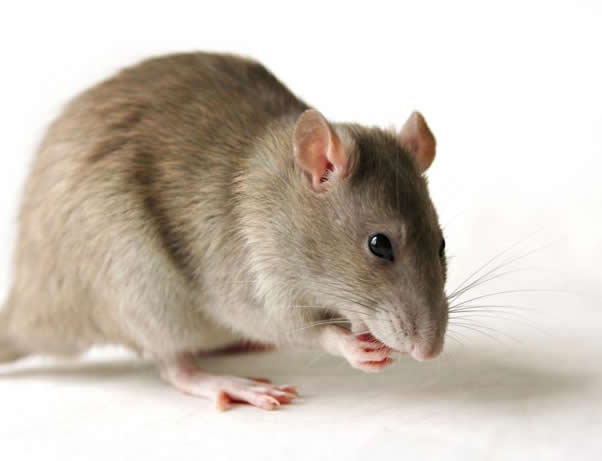
The surge of the spread of the Lassa fever propagated by a specie of rats has continued to gather momentum in Nigeria with several medical measures to cushion the epidemic.

The Federal Government said on Tuesday that Lassa fever has claimed 63 lives out of 212 suspected reported from 62 local government areas in affected states.

The Minister of Health, Prof. Isaac Adewole, confirmed this at the emergency National Council of Health meeting in Abuja on the outbreak of the disease.

Adewole listed the 17 affected states as Bauchi, Niger, Taraba, Kano, Rivers, Oyo, Ondo, Edo, Plateau, Gombe, Nasarawa, Lagos, Delta, Ekiti, Ebonyi, Zamfara and Kogi as well as the FCT. He said there is high level of denial and conspiracy across some states, adding that health managers should not deceive executives by the pretence and silence.

The Minister described the denial of Ebonyi to report five suspected cases and one death as conspiracy of denial. He said every state should consider itself at risk and put measures to contain and prevent the disease.

Adewole said the federal government would maintain high level of alert all year round to celebrate Lassa fever obituary next year. “With the resources available we will collectively eliminate the disease in Nigeria soon.
 
“We have special facilities around us and we have adequate human resource to address the challenge.

“We will strengthen the Primary Health Care Centres across the country to enhance the surveillance mechanism,’’
he said. The minister said 5,000 Primary Health Care centres would be activated before the end of 2016.

Lassa Fever Patient Escapes From A Hospital In Ebonyi State-Nigeria

A male patient who tested positive to the disease was reported to have escaped from a hospital in Ebonyi state to an unknown destination.

The minister of health, Prof Isaac Adewole expressed dismay concerning the situation stated that the patient could not have absconded on his own without the help of some of the healthcare givers in the hospital and has so far directed‎ that the patient must be looked for and treated immediately.

“He should be traced and taken back to the facility. He should be reassured that he will live if the treatment is done promptly as he could not have absconded on his own without the support of the health officers.

He lamented that so much is been expected from the Ebonyi state government as it has not done enough. He said there was no need for patients to be transferred to‎ Irrua in Edo state when the state has a functional healthcare center.

Tuesday, 19 January 2016

Dozens Feared Exposed As Sierra Leone Confirms New Ebola Death

A woman who died of Ebola this week in Sierra Leone potentially exposed dozens of other people to the disease, according to an aid agency report on Friday, raising the risk of more cases just as the deadliest outbreak on record appeared to be ending.

Why you must drink Carrot Juice And How to Make it


Carrot juice is a delicious and nutritious drink rich in beta carotene, vitamins A, B, C, D, E, and K, and minerals like calcium, phosphorous, and potassium. Carrots are great for your skin, hair, and nails, as well as your liver function, so making carrot juice at home is a smart way to give your whole body a boost. Whether you're using a blender or food processor, or have a fancy juicer, this article will walk you through how to make your own carrot juice.
  • Prep time: 20 minutes
  • Cook time: 15-30 minutes
  • Total time: 35-50 minutes

1-Clean your carrots.
Wash 2 pounds (1 kg) of carrots (about 8) under cold running water. Scrub them with a vegetable brush if you can. Use a knife to cut off the broader end, where the carrot either was or still is attached to the green, leafy part of the plant.
  • If you are especially concerned about pesticides on the surface of your carrots, you should peel them. This does not significantly reduce the nutritional value of your juice
  • You can also buy organically grown carrots, which cost more, but are pesticide-free

2-Cut the carrots into manageable pieces.

Even if you have a high-quality blender or food processor, you don’t want to risk damaging your equipment by throwing four whole carrots in there. Cut your carrots into manageable chunks before breaking them down into a juice. Any food processor or blender should work fine with 1 to 2 inch chunks of carrot.

3-Puree the carrots.

Place your cleaned, cut carrots in a blender or food processor. Process until finely chopped or mashed.
  • Add a small amount of water if the carrots are not very moist, and need a little help breaking down.
  • Note that a food processor will not puree the carrot as well as a blender will. It’s not that big of a problem using this method, but use a blender if you have one available


4-Mix with water.

You want to thin out the taste of pure carrot a little bit mixing the puree with water. This will both make it taste better, and also give you more juice. .
  • Bring two cups of water to a boil.
  • Mix the carrot puree and hot water in a large glass container.
  • Stir to ensure an even spread of puree throughout the mixture.

5-Let the mixture steep.

 One of water’s most incredible properties is how well it takes on nutrients and flavors when it’s hot. Just like tea, the longer you allow your carrot puree to steep in hot water, the better the juice will taste and serve your body nutritionally. Allow it stand for 15 to 30 minutes.

6-Remove the pulp.

Using a hand strainer, strain the juice into a 2 quart (2 L) pitcher.
  • Using the base of a glass or other blunt object, press the mash to extract as much juice as possible from the strainer.
  • If you want to strain out even more pulp, pour the resulting juice through a jelly strainer.

7-Add orange juice.

 It's optional, but it's tasty!

8-Adjust the blend.
 Depending on how rich you like your carrot juice, add additional water to taste
9-Serve immediately.
Juice begins oxidizing and losing valuable nutrients immediately — especially if you’ve used a high-speed centrifugal juicer. You should try to drink your juice as soon after making it as possible, either at room temperature or over ice — however you prefer it. However, if you must store it, refrigerate it for no more than 24 hours.

Nigeria On Alert As Lassa Fever Rages On.....numbers to call when you see a suspected patient

Lassa fever does not respect any person,party.age,sex,profession.Join hands to eradicate this disease that knows no ethnic or religious boundaries before its too late.Protect your environment.


1 dead,22 on surveillance in Delta
9 dead in Edo Plateau
2 deaths,31 quarantined
Student nurse tests positive in Ekiti
1 dead in Rivers,215 monitored
3 dead,92 monitored in Lagos
2 dead.31 monitored in Ondo
other states affected are  
Bauchi, Nassarawa, Niger, Taraba, Kano, Gombe and Oyo

 If you see a patient suspected to have Lassa fever call  immediately the Nigeria Center for Disease Control and Federal Ministry of Health using the following numbers: 08093810105, 08163215251, 08031571667and 08135050005.

for more information..www.masalifesaver.blogspot.com


Updates on Lassa fever outbreak in Nigeria

The Nigerian Medical Association (NMA) has subsequently declared the outbreak a national epidemic.


Nigeria is currently battling an outbreak of Lassa Hemorrhagic Fever (LHF) and the disease has so far claimed 53 lives from various states around the country.

Stay up to date with latest developments relating to the Lassa fever outbreak

January 12, 2016:
Lassa fever death toll rises to 41
The Federal Government says Lassa fever has claimed 41 lives from 93 reported cases in 10 states of the country

January 14, 2016:
Death recorded in the federal capital territory
Doctor dies of Lassa fever in Rivers
A Rivers State medical doctor, Ehivai Njamala, has died from the viral disease, Lassa fever. The medical practitioner, who was said to be a resident at the Braithwaite Memorial Specialist Hospital (BMSH), in Port Harcourt died today, January 14.


January 16, 2016:
Medical Union warns Nigerians to stop drinking soaked “garri” due to Lassa fever outbreak
The Medical and Health Workers Union, Lagos State Council, on Saturday said that it would embark on public enlightenment to discourage consumption of soaked garri for now to prevent Lassa fever


January 18, 2016:
Nursing student tests positive to Lassa fever in Ekiti
Two patients die from Lassa fever in Plateau State
Delta records first case of Lassa fever

January 19, 2016:
NMA declares Lassa fever outbreak a national epidemic

 
Here are the 7 symptoms of Lassa fever you should know:
1. Nausea
2. Vomiting (bloody)
3. Diarrhea (bloody)
4. Stomach ache
5. Cough
6. Chest pain
7. Constipation


Monday, 18 January 2016

Lassa fever: Rivers establishes three centres

THE Rivers State Government said it had established three centres to contain the dreaded Lassa fever that broke out in the state in December 2015.

The State Commissioner for Health, Dr. Theophilus Odagme, who disclosed this in Port Harcourt on Monday, explained that one person suspected to be affected by the disease had been admitted into one of the centres.

Odagme, who spoke through his Press Secretary, Mr. Paul Bazia, listed the three centres mapped out for the control and elimination of Lassa fever as Porp Johnson Health Centre, the VIP Ward at the Braithwaite Memorial Specialist Hospital and a space inside the University of Port Harcourt Teaching Hospital.
The commissioner also disclosed that apart from the person that had been admitted into one of the centres, about 250 were currently under surveillance.

He added that the Emohua Disease Control Centre established in the state to fight Ebola Virus in 2013 had been vandalised by unknown persons.
“We have established three centres so far; they are Porp Johnson Health Centre in Port Harcourt and one person is being observed there. We also have the VIP Ward in BMSH and also a space in the University of Port Harcourt Teaching Hospital.

“We are currently working on the disease control centre in Emohua that was used during the Ebola Virus outbreak. The centre has been vandalised by some unknown persons,” Odagme said.
On other measures put in place to curb the spread of Lassa fever in the state, the commissioner said the state had been collaborating with the World Health Organisation and the Federal Government in the fight against the dreaded disease.

Meanwhile, the Trade Union Congress has called on the state and federal governments to expedite action in containing the spread of the disease across the state and Nigeria.

Student nurse tests positive to Lassa fever in Ekiti


A patient on admission at the Federal Teaching Hospital, Ido Ekiti, has tested positive to Lassa fever, the State Government announced on Monday.


The Commissioner for Health, Dr Olurotimi Ojo, who broke the news in Ado Ekiti at the stakeholders meeting on Lassa fever, said the state’s medical team was working hard to save the patient, who has already been isolated at the hospital.

Ojo said the Chief Medical Director of the hospital, Dr. Lawrence Ayodele, had confirmed to him that the patient was a student of the School of Nursing at the teaching hospital.
He revealed that the patient had been treated for malaria and typhoid fever with high profile antibiotics, but did not respond to treatment. Further laboratory investigation eventually came out positive to the disease.
“Over the weekend, the state had confirmed a case of Lassa fever that is being managed at the Federal Teaching Hospital, Ido Ekiti. Treatment has commenced and the patient is stable,” Dr. Ojo said.
“Immediately the patient was diagnosed and confirmed, the management began the process of contact tracing. Once you have an index case, there is tendency of having a primary case and possible spread and this could be dangerous.

“Though, the doctors are handling the situation and monitoring the situation very closely . So, nobody has been quarantined after the contact tracing.”
Ojo added that Governor Ayodele Fayose had already prepared an isolated ward within the premises of Oba Adejugbe General Hospital, Ado Ekiti, even before the outbreak of the disease in the State.
“However, the situation is being curtailed with the efforts from the State government in collaboration with the Federal Ministry of Health and World Health Organisation, through the office of the National Centre for Disease Control,” he added.

“The governor is also embarking on public and town-to-town sensitisation about Lassa fever through the airing of jingles on the state broadcasting corporation and distribution of IEC materials to the people.”
He advised the people of the state to take precautionary measures and refrain from taking risk that can lead to the contact or spread of the disease.
by  Kamarudeen Ogundele, Ado Ekiti

Lassa fever: 3 dead, over 200 hospitalised in Rivers

The Rivers state government has confirmed that three persons have died, while more than 200 others are currently under observation, following the outbreak of Lassa fever in the state.


Dr Theophilus Odagme, Commissioner for Health in Rivers, made the disclosure in an interview with the News Agency of Nigeria (NAN) in Port Harcourt on Saturday.
He said that up to 50 people who had contacts with the first reported two cases could be out of observation because they had not shown symptoms of the disease.

The commissioner said that the medical doctor, who died after contracting the disease, had been buried after consultations with the family.

He said the doctor died at a hospital outside Port Harcourt and that contacts he had hours before his death were among those under observation.
According to the commissioner, government has set up a special centre to manage new cases of the disease, noting that no new case has been reported.
Odagme also said that the State Government was working with the World Health Organisation (WHO) and the Federal Ministry of Health to tackle the disease.
“We have been working with WHO and the Federal Ministry of Health. They are with us in ensuring that their supports come on board.
They are with us.
He advised people with symptoms of the disease to report to the nearest health centre for test and treatment.


Bird flu: Ebonyi, Plateau confirm bird flu outbreak.Government to shut unregistered poultry farms

The Federal Government has said it will shut unregistered poultry farms, following a fresh outbreak of the Avian Influenza (AI).
Director of Veterinary Services and Pest Control Services in the Federal Ministry of Agriculture and Rural Development Dr. Egejuru Eze said this at a sensitisation campaign for poultry farmers in Kuje and Gwagwalada councils, Abuja, at the weekend.
She said the move would  check unwholesome poultry products and encourage tracking of poultry farms whenever there is disease outbreak.
Dr. Eze said a situation where individuals arbitrarily set up poultry farms without licence would not be condoned.
She said poultry farmers should register at the nearest government veterinary office so that they could benefit from government support.
According to her, the Federal Government paid about N700 million as compensation to poultry farmers during the last bird flu outbreak, with N500 million still outstanding.
She said one should be proactive and engage in bio-security, instead of waiting for compensation and spreading the virus.
Dr. Gidado Muhammed of the Department of Veterinary and Pest Control Services described bird flu as a highly infectious and contagious disease.
He said the virus affects different species of birds, such as chicken, ducks, guinea fowls and others, which lives naturally in the wild.
Muhammed added that it could be transmitted from infected domestic and wild migratory birds.
He identified bio-security as a major means to safeguard the farms and stop spread of the disease.
“Some of the measures to be taken is to keep poultry closed, screen buildings on the farm to prevent entry of rats, birds and reptiles that can carry the virus into the building, separation of poultry from other animals and from other poultry species, no standing bodies of water on the farm as this can attract wild birds that may be carriers.
“Controlling the movement of people, animals, equipment and vehicles in and out of and within the farm. The farm should be fenced with a bowl containing disinfectant at the gate and entrance of each pen etc,” he advised.
Ebonyi and Plateau states have confirmed an outbreak of bird flu
The virus was detected in a poultry farm at Ugwuachara area of Abakaliki, the Ebonyi State capital.
Commissioner for Agriculture and Natural Resources, Mr. Orji Uchenna, confirmed the detection of the virus after a visit to the farm for an on-the-spot assessment.
According to him, the attention of his ministry was drawn to the development following massive death of the birds.
He said officials of the state veterinary services took a sample of the carcass to a research institute in Jos, where it was confirmed that the birds died from the H5NI strains of the Avian Influenza.
Orji directed the  Veterinary Department to isolate the farm and take inventory of poultry and ancillary farms as well as sustain enlightenment on the influenza.
Also, the Plateau Commissioner for Agriculture, Mrs. Linda Barau, said four farms were affected, with thousands of birds isolated.
Barau said efforts were being intensified to ensure that the disease did not spread to other farms.
She said farmers were advised to maintain a higher sense of bio-security to avoid spread of the disease.
The commissioner noted that she directed the director of Veterinary Services to liaise with farmers. Mrs. Barau advised them not to panic as the situation was under control.