Wednesday, 16 May 2018

Experimental stroke drug succeeds in preliminary trials

A new anti-stroke drug has now successfully passed preliminary clinical trials, leading its developers to enthuse over its potential as a more effective treatment, less likely to be accompanied by unwanted health events.


In an effort to find an additional treatment that may protect against some of these effects, scientists from The Scripps Research Institute (TSRI) in La Jolla, CA, have developed a new drug called 3K3A-APC.
The drug is an engineered variant of activated protein C, which humans normally produce. It has been linked to the regulation of blood clotting and to certain aspects of the body's inflammatory response.
This new clinical trial was placebo-controlled, meaning that the drug's actual efficacy was tested against a placebo. It also set out to confirm how high a dose of the experimental drug would be safe for human participants.
Therefore, the scientists recruited 110 people who had had acute ischemic stroke and who were following treatment with tPA, intra-arterial thrombectomy, or both of these therapies.
The participants — all aged between 18 and 90 — were followed for a period of 90 days, as they were administered varying doses of the experimental drug.
The scientists experimented with four different dosages — 120, 240, 360, and 540 micrograms per kilogram. All four dose levels — including the highest one — were tolerated well by the subjects, so the researchers declared them safe for human use.
Also, the drug was seen to perform well in terms of results related to intracranial hemorrhage, or brain hemorrhage.
It was found that the drug helped to reduce both total hemorrhage volume, or how much blood "leaked," and hemorrhage incidence, or how often the participants experienced this event, significantly.
"The observed trend toward lower hemorrhage rates is consistent with our expectations based on the drug's mechanism of action and activity in animal studies," says Dr. Patrick Lyden, one of the researchers involved with the current clinical trial.
But he adds that "[t]hese results should be confirmed in a larger clinical trial." This, the researchers explain, will be their next step. They aim to eventually get FDA approval for the experimental drug.

Friday, 26 January 2018

Lassa Fever Has Killed 16 People In Ondo, Ebonyi, Nasarawa, Kogi, Benue, Others

According to a report by The Nation, the Nigeria Centre for Disease Control yesterday said Lassa fever has killed 16 people in Ebonyi, Nasarawa, Kogi and Benue.
 
It also said 61 cases have been confirmed.
 
According to the agency, 10 health care workers have been infected in four states. Seven died in Ebonyi. One in Nasarawa. One in Kogi and one in Benue.
 
A statement by the agency reads: “Following the increasing number of Lassa fever cases reported from several States across the country, the Nigeria Centre for Disease Control has activated its Emergency Operations Centre (EOC) to coordinate the response to the outbreak on behalf of the Federal Ministry of Health.

“The EOC has deployed Rapid Response Teams to the most affected States- Ebonyi, Ondo and Edo States. The RRTs are supporting the States in response coordination, contact tracing, case management, risk communication and strengthening infection prevention and control practices. Emergency supplies have also been sent to treatment centres in all affected States.

“Since the beginning of 2018, a total number of 107 suspected Lassa fever cases have been recorded in ten states: Edo, Ondo, Bauchi, Nasarawa, Ebonyi, Anambra, Benue, Kogi, Imo and Lagos States. As at 21st January 2018, the total number of confirmed cases is 61, with 16 deaths recorded. Ten health care workers have been infected in four States (Ebonyi – 7, Nasarawa – 1, Kogi – 1 and Benue – 1) with three deaths in Ebonyi State.

“NCDC is collaborating with the World Health Organisation (WHO), Federal Ministry of Agriculture and Rural Development, Irrua Specialist Teaching Hospital, African Field Epidemiology Network, US Centers for Disease Control, University of Maryland Baltimore (UMB), Alliance for International Medical Action (ALIMA) and other agencies, in supporting the response in the affected states.”
 
The agency went on: “Lassa fever is an acute viral haemorrhagic illness, transmitted to humans through contact with food or household items contaminated by infected rodents. Person-to- person transmission can also occur, particularly in hospital environment in the absence of adequate infection control measures. Health care workers in health facilities are particularly at risk of contracting the disease, especially where infection prevention and control procedures are not strictly adhered to.

“Lassa fever can be prevented through practicing good personal hygiene and proper environmental sanitation. Effective measures include storing grain and other foodstuffs in rodent-proof containers, disposing of garbage far from the home, maintaining clean households, and other measures to discourage rodents from entering homes. Hand washing should be practiced frequently.
 
“Health care workers are again reminded that Lassa fever presents initially like any other disease causing a febrile illness such as malaria; and are advised to practice standard precautions at all times, maintaining a high index of suspicion. Rapid Diagnostic Test (RDT) must be applied to all suspected cases of malaria. When the RDT is negative, other causes of febrile illness including Lassa fever should be considered. Accurate diagnosis and prompt treatment increase the chances of survival.

“Family members who are providing care for patients with Lassa fever are advised to take extra caution. In addition, States are encouraged to ensure safe and dignified burial practices for patients who die from Lassa fever.”
 
The Bayelsa State government yesterday said it had taken measures to protect residents from the spread of Lassa Fever.
 
Commissioner for Health Prof. Ebitimitula Etebu said though no case of the fever had been reported in any part of the state, the government rolled out programmes to stop outbreak of Lassa fever in the state.
 
Speaking while presenting his ministry’s scorecard at the ongoing Inter-Ministerial/Agency Briefing at the Gabriel Okara Cultural Centre, Yenagoa, he said the people were being sensitised on the need to maintain hygienic environment.
 
He said: “There is no reported case of Lassa Fever in any part of the state but our people need to be conscious of their environment and if there is any incident of the disease, please report it to the nearest hospital for prompt attention.

“We need to be proactive in the way and manner we handle health related and other issues, that is why the present administration is committing so much to the sector.”
 
No fewer than three persons have been confirmed dead following the outbreak of lassa fever in Imo State.
 
Commissioner of Health Dr Angela Uwakwem confirmed the deaths in a chat with The Nation.
 
According to her, “lassa fever is in Owerri. It has been confirmed”.
 
The commissioner disclosed that the three persons who contacted the deadly virus, died after they were referred out of the Federal Medical Center (FMC) Owerri.
 
Uwakwem said: “We have seven suspected cases of lassa fever in the state. Three are confirmed dead. The Imo state government is working hard to establish the point of first contact .the media should equally help us to enlighten our people.”
 
The Chief Medical Director of the FMC, Dr Kingsley Achigbu, disclosed that the lassa fever victims who were referred to the hospital were later referred out.
 
Governor Rochas Okorocha said the state government has taken necessary steps to bring the situation under control.
 
Okorocha said: “This morning we woke up to hear that Lassa fever has killed three persons and we also have seven cases of Lassa fever patients and this number is too large for a State. And we are concerned about the speed of spread. These cases were recorded in some hospitals, somewhere in Orlu and some other parts of the State. For this reason, we kindly advise that people should avoid over crowded areas, lessen the shaking of hands, and body contacts at this period.

“You are aware that Lassa fever is caused by some species of rats. The state is on it. The Ministry of Health has been adequately informed to take all necessary steps to curtail the spread. But as this number has risen this morning, we advise that people should avoid as much as possible some foods and body contacts especially in schools and market areas.

“We will do everything humanly possible to make sure that this spread is curtailed. While government is taking this action, people should keep a clean and healthy environment at this time. Avoid so many children staying in one place while government should handle the burial of those that died of Lassa fever. As you know, Lassa fever is deadly but if any discovery is made, live can be saved.”

Honey regulates High blood Pressure

In hypertension, honey as a sweetener is better suited, as it does not raise the blood sugar levels.
It is relaxing (1 tablespoon 3 times daily) resulting in fewer stress hormones which can also counteract hypertension. . 

In the case of honey, it intervenes by stimulating the metabolism and thus helping in weight reduction.
Honey mainly consists of invert sugar and other sugars, depending on the variety.
It contains an abundance of minerals such as iron, manganese, boron, magnesium, calcium, sodium and potassium. 
 
It also includes various amino acids such as aspartic acid, glycine, proline, alanine. Moreover, it contains, vitamins including thiamine, riboflavin, niacin and vitamin C 

Any bee honey from the supermarket is not always the right choice.

Home-made honey is preferable to imported honey in this case.

Monday, 11 December 2017

Nigeria-FMC Umuahia Carries Out First Kidney Transplants On Two Patients, For Free


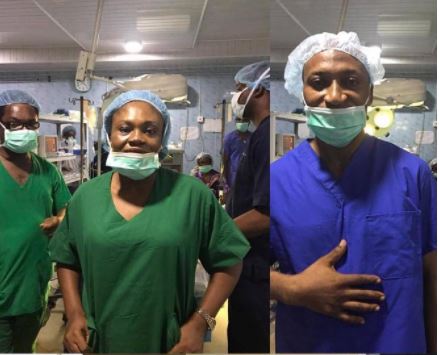
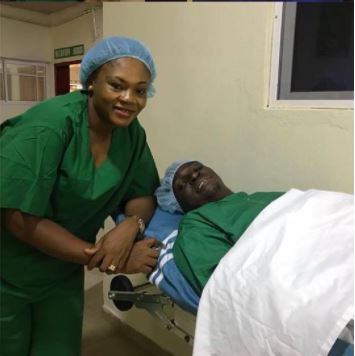
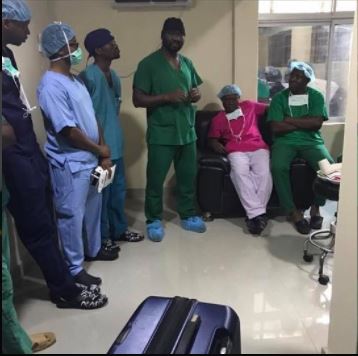
Excited doctors at the Federal Medical Centre (FMC), Umuahia, Abia State couldn't hide their joy after performing their first successful kidney transplants at the hospital.

Doctors at the Federal Medical Centre in Umuahia have successfully performed their first kidney tranplants
 
The Federal Medical Centre (FMC), Umuahia, Abia State has successfully carried out its first kidney transplantation, according to a report by Channels Television.
 
It was gathered that the kidney transplant which was carried out on two patients was conducted free of charge. The surgery commenced on Thursday, December 7 and was completed on Friday morning around 10:00 a.m.
 
This decision of the free surgery, according to the management of the centre is aimed at offering kidney transplant services to improve quality of life, minimise medical tourism as well as provide affordable kidney transplantation in Nigeria.
 
The surgical procedure was carried out by team of surgeons led by Dr Obi Ekwenna from University of Toledo Medical centre, USA and other surgeons from FMC Umuahia. It lasted more than ten hour in between procurement of kidney from the donor and actual transplanting for the recipient.
 
Relatives of the beneficiaries who have been undergoing dialysis expressed gratitude to the management for the gesture and expressed optimism for its sustainability.
 
One of the beneficiaries, Orji Ogbonnaya, a 37-year-old man who has been going through dialysis for four years said, “this is a great plan for people like us who cannot travel outside the country to do the surgery, because they do not have the finances to go outside the country, but right now, we have kidney transplant at our doorstep and it is free for us as the beginners of the place, so I appreciate it.”
 
 
According to the CMD, FMC Umuahia, Dr Abali Chuku , the decision to offer kidney transplant free of charge for two patients is aimed at bridging the gap in obtaining quality healthcare due to the financial burden.
 
He said about 10 centers in Nigeria are providing kidney transplantation but all the ten centers are outside the south-eastern area. So, the Federal Medical Centre, Umuahia introduced the service within in order to add value to the health sector.
 
‘’Now the incidence of this kidney diseases is about seven percent of admitted patients. The alternative which is usually very expensive is kidney transplantation and a lot of them cannot afford it and it becomes a bit challenging for such patients and the dialysis cost is also quite high.

‘’This kidney transplantation is a skill transfer session which the Federal Medical Centre hopes to run for four years to enable the centre to fully optimise the transfer of skills from the partnership with the University of Toledo Medical Centre,” he said.
 
 
Dr Obi Ekwenna said the entire procedure was successful as a result of combined team effort.
 
“This is a team effort and that is what is required to have a successful transplant. We want to be able to save the life of patients who have kidney failure around this area and we target for that, it is just me from United States and the rest of the surgeons here. They are all very capable and obviously with some guidance we are able to do a successful kidney transplant,” he said.
 
 
Speaking on the present condition, Ekwenna said both the donors and recipients are are currently doing well.
 
“The recipient is doing beautifully and the donor is moving around, the donors are the heroes, they are amazing people that come forward to save life and they will live a normal life,” he said.
 

Saturday, 28 October 2017

Indian Twin Kids Joined At The Skull Have Been Successfully Separated


Toddler twins joined at the head have been successfully separated today following an 11-hour operation by a team of 30 doctors, 20 nurses and many other paramedical staff.

Medics from around the world came together in New Delhi, India, for the risky surgery on Jaga and Kalia, who amazed the health profession by surviving to the age of two-and-a-half.

The twins were born in a village in the eastern state of Odisha with shared blood vessels and some shared brain tissue.

They had undergone the first phase of the separation surgery in August.

"The most challenging job after the separation was to provide a skin cover on both sides of the brain for the children as the surgery had left large holes on their heads," said Maneesh Singhal, a plastic surgeon who was a part of the operating team.

"The skin was generated from the expansion of two balloons which were placed inside their heads during the first surgery in August,"

The huge operation, their second had to be brought forward after Jaga's health deteriorated in recent months.

The boys who were originally named Honey and Singh have survived against the odds as twins fused at the cranium have an 80 per cent risk of dying by the age of two if they are not separated.

Odisha health minister Pratap Jena said: 'Their health is stable, but they will be kept under observation for 72 hours.

Plastic surgeons are on their job after they were separated surgically.'

Nigerian Government Confirms Six Fresh Cases of Monkeypox as Disease Hits Abuja

The Federal Government has confirmed six fresh cases of monkeypox including one in Abuja, the Federal Capital Territory.
 
The Minister of State for Health, Dr. Osagie Ehanire, made the announcement in his office in Abuja on Friday, according to a statement by the Director of Media, Mrs. Boade Akinola.
 
Ehanire said apart from Abuja, there are two new cases of the disease in Bayelsa and Akwa Ibom states each and one in Enugu.
 
This brings the total number of confirmed monkeypox cases to nine. Ehanire noted that investigations were ongoing to see if any of the new cases had a link with the Bayelsa cluster, where the outbreak started.
 
He called for calm among members of the public, as the Nigeria Centre for Disease Control is working with all affected states to ensure case finding and adequate management.
 
The minister explained that as frightening as the manifestation of the ailment may seem, “no fatality has been recorded till date. As of October 25, 2017, a total of 94 suspected cases have been reported from 11 states (Akwa Ibom, Bayelsa, Cross River, Delta, Ekiti, Enugu, Imo, Lagos, Nasarawa, Niger, Rivers and the FCT).”
 
He noted that the newly confirmed cases were patients already being managed by public health authorities and have been receiving appropriate clinical care since the onset of the illness.
 
Ehanire stated that the Federal Ministry of Health, through the NCDC, was in close contact with all state epidemiology teams, as well as the health facilities providing clinical care to both suspected and confirmed cases.
 
The minister said health commissioner across the 36s states had been advised to place all health care facilities and disease surveillance and notification officers on alert, to ensure early case detection, reporting and effective treatment.
 
He said the NCDC had also deployed rapid response teams in the four states with confirmed cases.
 
Ehanire said an interim national guideline for monkeypox had been developed and disseminated to all states for coordination of response activities. This is also available via http://ncdc.gov.ng/themes/common/docs/protocols/50_1508912430.pdf.
 
He explained that monkeypox is a largely self-limiting disease i.e. a disease that resolves itself. Generalised vesicular skin rashes, fever, and painful jaw swelling are characteristic symptoms associated with an infection. Although there is no specific medicine to treat the disease when intensive supportive care is provided virtually all patients recover fully, as we have seen with the current outbreak.
 
It is thought that people could get monkeypox if they are bitten or scratched by an animal, or come in contact with animal blood in preparing bushmeat or have contact with an infected animal’s body fluids or sores.
 
“Monkeypox may also be spread between people through prolonged face-to-face contact, or through contact with body fluids or sores of an infected person, or items that have been contaminated with fluids or sores (clothing, bedding, etc.),” Ehanire said.
 
Measures that can be taken to prevent infection with Monkeypox virus include avoiding contact with animals that could carry the virus such as rodents or other animals that appear sick or were found dead in areas where monkeypox occurs.

Monday, 23 October 2017

Nigerian Professor Invents HIV/AIDS Drug, Calls for Clinical Trial


A researcher, Prof. Madubuike Ezeibe, has called on the Federal Government to carry out a clinical trial of the drug he invented for the treatment of HIV/AIDS, Aluminum-Magnesium Silicate, reports Punch.
 
Ezeibe who is a professor of Veterinary Medicine, Michael Okpara University of Agriculture, Umudike, made the call in Umuahia on Monday.
 
A clinical trial is a study that explores whether a medical strategy, treatment, or device is safe and effective for humans. It shows which medical approaches that work best for certain illnesses or groups of people.
 
The don who presented a paper on the potential of the drug as both antiviral and raw material, at a world conference on Ethnopharmacology in Chicago, United States, on May 2, 2016, said that more than one year after he invented and presented his findings at different international conferences, no authority anywhere in the world had disputed the research findings.
 
“I, therefore, appeal to the federal government to institute an inter-ministerial committee to carry out clinical trial of the drug in six centres across the country without further delay.

“The committee should comprise federal Ministries of Health, Education, Environment as well as Science and Technology, with, at least, 1000 sample patients from each state of the federation.

“Some of the findings of the research include that silicates have molecules that are 0.96 nanometre in size while HIV has molecules as big as 110 nanometres.

“The particles of AMS are positively and negatively charged, while HIV-infected cells are positively charged.

“The AMS are immune stimulants; one can use simple sugar (glucose) to transport charged molecules across the mucous membrane to the blood.

“Glucose helps to transport the drug to any part of the body, including ‘the sanctuary’, where other drugs cannot reach to attack the HIV-infected cells.

“So, if these findings are true and nobody has challenged the claims of the research, let the federal government set up an inter-ministerial committee to conduct clinical trial of the medicine,’’ he said.
 
Ezeibe expressed joy that the Vice Chancellor of MOUAU, Prof. Francis Otunta and the University Senate had investigated his claims and given their approvals.
 
He said that aside from the support from the university, the Abia Government also sponsored the publication of the book on AMS which, according to him, is now available for sale.
 
The researcher said that no fewer than 500 HIV cases within and outside Nigeria had been referred to him which he treated.
 
“All the HIV cases were referral from a medical doctor to the Medical Director of MOUAU. I have also handled referrals from different parts of African and Asian continents,’’ Ezeibe said.

Wednesday, 11 October 2017

Bayelsa’s 7 Monkey Pox Patients Discharged From Hospital

Seven out of the 13 monkey pox patients on admission at the Niger Delta University Teaching Hospital, Okolobiri in Bayelsa have fully recovered, the state Commissioner for Information, Mr Daniel Iworiso-Markson, has said.

A patient of Monkey Pox The commissioner said in a statement on Wednesday in Yenagoa, that the seven patients had been discharged from the hospital. The News Agency of Nigeria (NAN) reports that the contagious disease broke out three weeks ago in Agbura area of Yenagoa following reports that a family manifested symptoms of monkey pox after eating monkey meat.

He said the six other patients under medical surveillance at the teaching hospital were responding positively to treatment. “The government has been able to successfully contain the spread of the disease as no new case has been reported in the last few days.

“With the way and manner government deployed its machinery and with the team of dedicated health and medical personnel, monkey pox will soon be fully kicked out of Bayelsa state,” he added. Iworiso-Markson commended the state Ministry of Health and National Centre for Disease Control for their efforts in containing the disease. The commissioner also appreciated people in the state for taking preventive measures against further spread of the disease and urged them to maintain healthy lifestyle, environmental and personal hygiene.

According to him, feedback received from various channels in the state indicates that public enlightenment campaign, especially in local languages, have succeeded in alerting people to avoid actions that would further spread the disease.

Tuesday, 10 October 2017

No Syringe, X-ray Machine & More: Aisha Buhari Calls for Probe of Aso Rock Clinic After N3.2b Budget

The wife of the President, Mrs Aisha Buhari, has called for a probe of how the N3.2billion budget for the State House Medical Centre in Aso Rock is utilized after finding out that it doesn't have an x-ray machine or even a syringe.
 
While speaking at the opening of a 2-day stakeholders meeting on Reproductive, Maternal, Newborn, Child, Adolescent Health and Nutrition organised by her pet project, Future Assured in Abuja, wife of Nigeria’s president, Aisha Buhari called for a probe of the State House Medical Centre over poor health facilities in the hospital despite the huge budgetary allocation to it.
 
According to Vanguard, Mrs. Buhari who condemned the “lack of facilities” at the hospital during a programme in Abuja on Monday, equally lamented the total or dearth of some necessary hospital facilities such as syringe, drugs and equipment needed for saving lives. 
 
Wife of the President, Mrs Aisha Buhari, who lamented that she wanted to do an x-ray at the clinic few weeks ago but was told the X-ray machine was not functional, said the ongoing renovations at the clinic was baseless because the hospital lacked the equipments to save lives.
 
She said; “Before I commence my speech, I’ll like to be realistic to say a few words concerning health in Nigeria and health delivery system in Nigeria. It’s very very very poor, sorry to say that. I am happy the MD of Aso Clinic is here, is he around? Dr. Munir (Dr. Hussain Munir, consultant cardiologist and the chief medical director at state house medical centre) or his representative? Ok, he is around.

“Ok Dr. Munir, I’m happy you are here. As you are all aware for the last six months, Nigeria wasn’t stable because of my husband’s ill health, we thank God he has fully recovered now.

“If somebody like Mr. President can spend several months outside Nigeria, then you wonder what will happen to a common man on the street in Nigeria.

“Few weeks ago, I was sick as well, they advised me to take the first flight out to London, I refused to go. I said I must be treated in Nigeria because there is a budget for an assigned clinic to take care of us.

“If the budget is N100 million, we need to know how the budget is spent. Along the line, I insisted they call Aso Clinic to find out if the X-ray machine is working, they said it is not working. They didn’t know I am the one that was supposed to be in that hospital at that very time.

“I had to go to a hospital that was established by foreigners in and out 100 percent. What does that mean?

“So, I think is high time for us to do the right thing. If something like this can happen to me, no need for me to ask the governors’ wives what is happening in their states. This is Abuja and this is the highest seat of government, and this is presidential villa. One of the speakers have already said we have very good policies in Nigeria. In fact,we have the best policies in Africa. Yes. of course, we have, but the implementation has been the problem.

“So, we need to change our mindset and do the right thing. I’m sure Dr. Munir will not like me saying this but I have to say it out. As the Chief Medical Director, there are a lot of constructions going on in this hospital but there is no single syringe there what does that mean? Who will use the building? We have to be good in reasoning. You are building new building and there is no equipment, no consumables in the hospital and the construction is still going on.

“Going back to the same health issue in Nigeria, as a result of spending several months by the President outside Nigeria, a 40-year-old man who was still living in his father’s house, created a …. and that is a major set back for the country and the health sector did not benefit.”

Enugu State Ministry of Health Issues Warning to General Public Over Monkey Pox

Following the outbreak of Monkey Pox disease in Enugu state, the Ministry of Health in the state has warned people to stay away from wild animals.
The Enugu State Ministry of Health has urged residents of the state to be wary of touching or coming in contact with wild animals, for self protection against Monkey-pox virus.
 
The ministry’s Director of Public Health Services, Dr Okechukwu Ossai, gave the advice when he spoke with the News Agency of Nigeria on Tuesday, on measures taken by the ministry to prevent the disease in the state.
 
Ossai said the ministry had begun sensitisation in local radio and television stations about the disease, its signs and symptoms.
 
He said that the ministry had also gone ahead to orientate its disease surveillance officers in all the local governments and border areas on the disease.
 
The orientation, he said include the physical manifestations and signs of the disease.

“At the grassroots, we have alerted our health focal persons to monitor the environment and ensure that no one incubates any strange disease in his or her house,’’ he said.
 
The director said that personal, family and environmental hygiene especially hand washing, was key and necessary for all residents of the state to observe, to avoid any form of virus or contagious disease.
 
He said monkey-pox could be contacted through touching the body or body fluid of wild animals, adding that apart from monkeys, antelopes and wild rats could also harbour the virus.
 
“I will also urge hunters, butchers and those that prepare bush meat from these animals for consumption to be wary.

“However, if the meat from these animals mentioned are cooked very well beyond boiling point, the meat is safe as the virus is destroyed via proper boiling.’’
 
Health experts explain that Monkey-pox, a virus found in monkeys and other wild animals is, however, rare in humans, adding that  it belongs to the same family of Chicken-pox and Small-pox. 
 
-NAN